 Skip to content
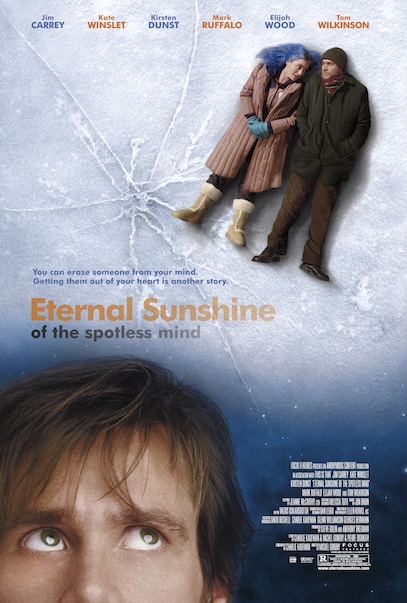
Script Analysis: Eternal Sunshine of the Spotless Mind
Curious about the quality of our script analysis? Explore our free sample script analysis of Eternal Sunshine of the Spotless Mind (2004 film).
Coverage Report Overview
Logline
When a heartbroken man erases his ex-girlfriend from his memory, he fights from within his own unconscious mind to reclaim her before she’s gone forever — only to discover they may be destined to repeat the same painful cycle all over again.
Genre
Romance, Science Fiction, Drama.
Top Keywords
memory-erasure, science-fiction, romance, heartbreak, relationship, non-linear-narrative, surrealism, identity, love, loss, nostalgia, psychological, experimental, indie-film, melancholy, unreliable-reality, emotional-trauma, second-chances, self-discovery, acceptance.
Location Setting
Montauk.
Script Score
1. Character Development: 9.0/10
Joel and Clementine are among the most fully realized characters in modern screenwriting. Joel’s introverted, self-deprecating nature is conveyed through precise behavioral details—his mumbling, his inability to make eye contact, his journal entries—while Clementine’s impulsive, emotionally volatile personality is rendered with equal specificity. Both characters evolve not through conventional arcs but through the revelation of layered selves as memories are peeled away, culminating in a profound mutual acceptance of each other’s flaws. The supporting characters (Mary, Stan, Patrick, Mierzwiak) are also given surprising depth for their screen time, particularly Mary’s devastating subplot.
2. Plot Construction: 9.5/10
The screenplay’s non-linear structure is masterfully engineered, using the memory-erasure procedure as both narrative engine and structural principle. The story moves backward through Joel’s memories while simultaneously tracking events in the present, creating a dual timeline that generates escalating tension and emotional stakes. The “hiding in memories” conceit provides a thrilling chase element within what is essentially an intimate relationship drama. The convergence of multiple storylines—Joel’s erasure, Patrick’s theft of identity, Mary’s revelation, Clementine’s parallel experience—is handled with remarkable precision.
3. Dialogue: 9.5/10
The dialogue is extraordinary in its naturalism and emotional precision. Clementine’s rapid-fire, associative speech patterns (“Blue Ruin,” the hair color naming riff) feel genuinely spontaneous while revealing character. Joel’s halting, self-interrupting mumbles perfectly capture social anxiety. The screenplay excels at capturing how real couples talk—the shorthand, the loaded silences, the way arguments escalate from trivial irritants to devastating truths. The contrast between the tape-recorded confessional voices and the characters’ present-tense vulnerability in the final scenes is devastating.
4. Originality: 10/10
This is one of the most original screenplays ever written. The concept of memory erasure as relationship metaphor is brilliant, but the execution elevates it further—using the degradation of memories as a visual and emotional language, hiding within childhood memories, the recursive structure where the couple meets again without knowing they’ve met before. The screenplay invents its own rules and follows them with rigorous internal logic while maintaining emotional authenticity. No prior work achieves this particular fusion of science fiction premise and intimate romantic drama.
5. Emotional Engagement: 9.5/10
The screenplay achieves a rare emotional complexity, simultaneously evoking grief, nostalgia, humor, tenderness, and existential dread. The central irony—that Joel only fully appreciates his relationship as it’s being destroyed—is heartbreaking. The Velveteen Rabbit scene, the Charles River sequence, and the final exchange (“You will think of things.” “Okay.” “Okay.”) are among the most emotionally resonant moments in contemporary screenwriting. The script earns its emotions through accumulated specificity rather than sentimentality.
6. Theme and Message: 9.5/10
The screenplay explores memory, identity, love, and impermanence with philosophical sophistication that never becomes didactic. The Alexander Pope quote (“Eternal sunshine of the spotless mind”) crystallizes the central question: is it better to forget pain or to carry the full weight of experience? The answer emerges organically through the narrative—that love requires accepting inevitable hurt, that erasing pain also erases meaning. The parallel storylines (Mary/Mierzwiak, Patrick/Clementine) refract the central theme through different prisms, enriching the exploration without redundancy.
7. Overall Rating: 9.5/10
This screenplay represents a pinnacle of the form, achieving near-perfect synthesis of structural innovation, emotional depth, and thematic richness. Its highest marks come from its unparalleled originality and the quality of its dialogue, while its character work and emotional engagement are only fractionally below that peak. The script demonstrates that formally ambitious, intellectually challenging writing can also be deeply moving and accessible, setting a standard that few screenplays in any era have matched.
Based on the Script Score, this screenplay ranks at 99th percentile and received a Recommend*
(The percentile indicates how this script compares to other scripts of a similar genre and style.)
Synopsis
Joel Barish, a quiet and introverted man, impulsively takes a train to Montauk on Valentine’s Day where he meets the vibrant, impulsive Clementine Kruczynski. The two form an instant connection, but Joel soon discovers that Clementine — his ex-girlfriend of two years — has had him erased from her memory using a mysterious company called Lacuna, Inc. Devastated, Joel undergoes the same procedure, but mid-erasure he falls back in love with his memories of Clementine and desperately tries to hide her within the deepest recesses of his mind to prevent her from being wiped away. Meanwhile, Patrick, one of the Lacuna technicians who performed Clementine’s procedure, has been using Joel’s stolen words and gifts to seduce her, while Lacuna’s receptionist Mary discovers she herself had a prior romantic relationship with the company’s founder, Dr. Mierzwiak, which he had her erase. As the procedure completes and both Joel and Clementine wake with no memory of each other, Mary mails them recordings of their own erasure sessions, forcing them to confront the painful truth of what they once shared — and leaving them to choose, fully aware of their flaws and inevitable conflicts, whether to try again.
Comprehensive Synopsis
Joel Barish is a quiet, introverted man in his thirties who, on Valentine’s Day 2003, impulsively skips work and takes a train out to the desolate winter beach at Montauk. He wanders the empty shore, sits on a rock, and writes in his journal, noting that two years of entries have been torn out and that he has recently reconnected with his ex-girlfriend Naomi after a long break-up. While sitting on the beach, he notices a woman in a fluorescent orange sweatshirt walking in the distance. He watches her but says nothing.
Later, at a local diner, the same woman sits nearby. She has bright blue hair and an electric, restless energy. She orders the same grilled cheese and tomato soup as Joel and spikes her coffee with a small bottle of alcohol from her pocket. Their eyes meet briefly. At the train station platform, she waves at Joel with exaggerated familiarity, as if they are old friends. On the train back to Rockville Center, she eventually makes her way toward him and introduces herself as Clementine Kruczynski, a book-store employee who believes she recognizes him as a regular customer. Their conversation is awkward and lively in equal measure — she is impulsive, emotionally volatile, and disarmingly honest; he is mumbling, self-deprecating, and quietly enchanted. When the train arrives, Joel offers her a ride home in the cold. She accepts. At her apartment, they drink gin and tonics, listen to music, and talk late into the evening. She tells him about a young man named Patrick she has been seeing, though she feels something is wrong between them. Before Joel leaves, she writes her phone number on his hand and asks him to call that same night.
What Joel does not yet know is that he is already living inside the aftermath of a much longer story. When he arrives home, his neighbor Frank casually mentions Clementine by name and asks about Valentine’s Day plans, as though Joel and Clementine have been a couple for years. Joel notices a yellow envelope in Frank’s mail from a company called Lacuna, Inc. Shortly after, his friends Rob and Carrie show him a card from Lacuna informing them that Clementine Kruczynski has had Joel Barish erased from her memory and asking them never to mention their relationship to her again. Joel is devastated and disbelieving. He goes to a Barnes and Noble bookstore where Clementine works, hoping to confront her, and she greets him with a professional smile — she has no idea who he is. He watches in horror as Patrick, a young technician who works for Lacuna, arrives and kisses her affectionately.
Joel goes to Lacuna’s office and meets its founder, Dr. Howard Mierzwiak, a calm and seemingly compassionate man who confirms that Clementine voluntarily had their two-year relationship erased almost on a whim. In a fit of grief and rage, Joel decides to undergo the same procedure — to have Clementine erased from his own memory. He collects every object associated with her: photographs, letters, gifts, journal entries, clothing, CDs, and even potatoes she had dressed in costumes. He brings them to Lacuna, where they are used to map the neural pathways of his memories of her. That night, Joel is sedated in his apartment while two young technicians, Stan and Patrick, operate the erasure equipment beside his sleeping body.
As the procedure begins, Joel moves backward through his memories of Clementine. The most recent and painful ones dissolve first — their fights, her drunk driving, her cruelty, his own cruelty in return. But as the erasure progresses deeper into happier memories, Joel begins to panic. He realizes, from within his own unconscious mind, that he does not want to lose her. He tries desperately to hide Clementine in memories where she does not belong — in his childhood kitchen, in a bathtub scene from infancy, in a humiliating adolescent memory — hoping the technicians cannot find her there. He screams at the ceiling, begging for the procedure to be stopped, but no one can hear him.
Meanwhile, Patrick — who fell in love with Clementine while erasing her memories of Joel — has been using Joel’s own words, gifts, and intimate knowledge to court her. He gives her the necklace Joel had bought for her as a Valentine’s gift, calls her by Joel’s private nickname for her, and takes her to the frozen Charles River in Boston, reciting almost verbatim what Joel once said to her there. Clementine is moved but also deeply unsettled, sensing something is wrong without being able to name it.
Back in Joel’s apartment, Stan and his girlfriend Mary, who works as Mierzwiak’s receptionist, have become stoned and distracted. Stan calls Mierzwiak in the middle of the night when Joel’s signal disappears from the neural map. Mierzwiak arrives and takes over the procedure manually. His wife Hollis also arrives, having suspected something between Howard and Mary. In the confrontation outside the apartment, Hollis tells Mary to ask Howard to tell her the truth. It emerges that Mary and Howard had a prior romantic relationship — and that Mary herself had previously undergone the Lacuna procedure to erase her memories of him, including an abortion. Devastated, Mary goes to the Lacuna office, finds her own file, and listens to the tape of her session. She then loads boxes of Lacuna client files into her car and drives away, intending to return people’s erased memories to them.
Inside Joel’s mind, the erasure continues. Joel and a fading Clementine run through decaying memories together — their first date at a Broadway show, their first night together, a rainy afternoon reading on the couch, a fight at a flea market, their first meeting at a beach bonfire. In each memory, Clementine grows more transparent, more robotic, more gone. In the final memory — the night they first met — Joel and Clementine say a goodbye they never had in real life. He tells her he loves her. She begins to respond, and then she is gone.
Joel wakes the next morning with no memory of Clementine. He notices a mysterious dent in his car but cannot explain it. He goes to work, calls Naomi, and begins cautiously rekindling that relationship. He seems hollow and distracted.
Mary, meanwhile, mails audio cassettes to Lacuna’s former clients, returning their erased memories to them. Clementine receives one in the mail while riding in a car with Joel — the two have met again, just as they did at the beginning of the film, and have spent a wonderful night together on the frozen Charles River. As they drive, Clementine plays the tape. It is her own voice, recorded during her Lacuna session, describing Joel with contempt and exhaustion — calling him pathetic, passive, and a waste of her time. Joel, hearing his own tape separately, hears himself describe Clementine as a train wreck, pathetic, and insecure. Both are wounded. Joel drops Clementine off and drives away.
But Clementine goes to Joel’s apartment. She finds him listening to his tape in a ransacked study, holding a drawing he made of her in a skeleton costume. They sit together, listening to the worst things they ever said about each other, and something shifts. They are honest with each other in a way they perhaps never were before. Clementine gets up to leave. Joel follows her into the hallway, unable to let her go, unable to articulate why. He asks her to wait. She stops. He tells her he cannot think of a single thing he does not like about her. She warns him that he will — that she will get bored and feel trapped, because that is what always happens with her. He says okay. She says okay. They stand in the hallway, looking at each other, and the film ends there — not with resolution, but with the fragile, clear-eyed decision to begin again anyway, knowing everything.
Plot Assessment and Enhancement
What Works Well
The screenplay’s non-linear structure is its greatest asset, functioning not as a gimmick but as an organic expression of how memory actually works — fragmented, emotionally weighted, and resistant to clean chronology. By opening with what is actually a second first meeting between Joel and Clementine (before the audience understands the erasure has already occurred), Kaufman creates a mystery that unfolds backward and inward simultaneously. The audience experiences the disorientation of amnesia alongside the characters, which is a rare structural achievement where form and content are genuinely inseparable.
The central erasure procedure generates extraordinary dramatic tension because it transforms a passive, sleeping protagonist into someone fighting for his own memories in real time. Joel’s shift from wanting Clementine erased to desperately trying to preserve her is the emotional engine of the entire piece, and it works because the memories we witness being destroyed are specific, textured, and recognizable — the rainy afternoon reading together in underwear, the chicken grease on her chin at the bonfire, the frozen Charles River. These are not generic romantic beats; they are idiosyncratic details that make the relationship feel lived-in and worth saving.
The B-plots are structurally essential rather than decorative. Patrick stealing Joel’s mementos, letters, and words to seduce Clementine creates a genuinely unsettling doppelgänger dynamic that raises the stakes of the erasure — Joel isn’t just losing memories, he’s losing his identity to a thief. Mary’s subplot mirrors the central story with devastating economy: her revelation that she herself underwent the procedure, that her affair with Mierzwiak was erased and is now repeating, delivers the screenplay’s thesis — that erasing pain doesn’t prevent its recurrence — without a single line of exposition. The Alexander Pope quote she delivers (“Eternal sunshine of the spotless mind”) lands with full ironic weight because she doesn’t yet know it describes her own condition.
Clementine is written with uncommon honesty. She is not a Manic Pixie Dream Girl despite surface resemblances; the screenplay consistently undercuts any idealization. Her alcoholism, her cruelty, her insecurity about her weight, her screaming fight at the flea market about having children — these are given equal weight to her spontaneity and warmth. Joel’s tape recording calling her a train wreck and her tape calling him a wimpy pathetic man are devastating precisely because both assessments contain truth. The screenplay refuses to let either character off the hook.
The tonal control is remarkable. The comedy — Joel’s failed attempts at humor (“Your caw is something to crow about”), the potato women, Stan and Patrick’s banal workplace chatter while erasing someone’s deepest memories — never undermines the emotional gravity. Instead, it amplifies the horror and sadness by contrast. The juxtaposition of Stan and Mary having sex on the floor while Joel’s most precious memories are being destroyed is both darkly funny and genuinely harrowing.
The ending is one of the most emotionally complex in contemporary screenwriting. Joel and Clementine hear the worst things they will eventually say about each other, and they choose to proceed anyway. Clementine’s warning — “you will think of things, and I’ll get bored with you and feel trapped because that’s what happens with me” — followed by Joel’s “Okay” and her answering “Okay” is not a happy ending or a sad one. It is an honest one, and it earns its ambiguity through 129 pages of rigorous emotional excavation.
Opportunities for Improvement
The Patrick subplot, while thematically resonant, creates a tonal problem in its middle sections that risks pulling the audience out of Joel’s interior journey. The scenes of Patrick reading Joel’s letters, stealing the Valentine’s gift, and using Joel’s words on Clementine are effective in concept, but the execution leans toward a thriller-adjacent stalker narrative that sits uneasily alongside the lyrical memory sequences. Patrick’s phone call to Stan from Clementine’s apartment, his *69-ing Joel’s number, and his lurking outside Joel’s car in the morning all function as plot mechanics rather than emotional revelations. The screenplay would benefit from either deepening Patrick’s interiority — giving us a glimpse of his genuine loneliness or self-awareness about what he’s doing — or trimming his scenes to their essential function. As written, he occupies a middle ground where he’s too present to be a background threat but too thinly drawn to be a compelling antagonist. His final appearance, emerging “seemingly from nowhere” after Clementine receives the tape, feels particularly mechanical.
Stan and Mary’s scenes in Joel’s apartment, while necessary for the procedural framework, occasionally stall the momentum of Joel’s interior fight. The extended dialogue about whether Patrick is better-looking than Joel, Mary’s arrival and her getting-ready-for-Howard routine, and the joint-smoking sequences all serve to establish the casual negligence with which these technicians handle someone’s psyche, but the point is made redundantly. Three or four of these interstitial scenes could be consolidated without losing the thematic contrast between the operators’ indifference and Joel’s desperation. The pacing sags most noticeably between the Velveteen Rabbit scene (a high point of emotional intensity) and Mierzwiak’s arrival, a stretch where the external apartment scenes repeat the same dynamic — Stan is incompetent, Mary is infatuated, Patrick is absent — without escalation.
Mary’s subplot, while its payoff is devastating, relies on a revelation (her prior affair with Mierzwiak, her own erasure) that arrives almost entirely through exposition — Hollis’s cryptic “Tell the girl,” followed by Mierzwiak’s summary explanation. The tape Mary finds in the office is powerful, but the scene of her listening to it is essentially a monologue delivered to an empty room. The screenplay might benefit from dramatizing even one fragment of Mary’s erased relationship with Mierzwiak — a brief flash of memory triggered by the tape, paralleling Joel’s memory sequences — to give her arc the same experiential quality that makes Joel’s story so affecting. As written, Mary’s story is told to us rather than shown, which creates an asymmetry with the screenplay’s otherwise rigorous commitment to subjective experience.
The Naomi character functions almost entirely as a plot device — the safe relationship Joel leaves, the fallback option he briefly revisits. She appears in fragments (the park breakup, the dinner date, the phone calls) but never achieves enough dimensionality for the audience to feel the weight of Joel’s choice. Even one scene that showed what was genuinely good about their relationship — not just its safety but its specific texture — would make Joel’s oscillation between Naomi and Clementine feel more like a real dilemma and less like a foregone conclusion. The screenplay’s sympathies are so clearly with Clementine that Naomi becomes a straw figure, which slightly undermines the theme that relationships are complex and that no choice is clean.
The rules of the erasure procedure are productively ambiguous for most of the screenplay, but there are moments where the internal logic becomes unclear in ways that create confusion rather than mystery. Joel’s ability to “hide” Clementine in childhood memories is a brilliant conceit, but the mechanism by which he drags her there — physically running through decaying scenes while holding her hand — raises questions about agency that the screenplay doesn’t fully address. Can Joel always move between memories at will, or only when the procedure glitches? Why does hiding work temporarily but not permanently? Mierzwiak’s ability to locate Joel in non-Clementine memories suggests the procedure can access any memory, which would seem to make hiding futile from the start. A brief moment of Clementine or Joel acknowledging the likely futility — choosing to hide not because it will work but because the act of trying is itself meaningful — would align this plot mechanism more closely with the screenplay’s emotional thesis.
The final sequence, from the tape delivery through the hallway confrontation, is the screenplay’s most critical stretch, and while the ending itself is nearly perfect, the mechanism that gets them there — Mary mailing Lacuna tapes to former clients — is handled somewhat hastily. Mary’s decision to distribute the files is implied but never shown as a deliberate choice with consequences she weighs. Given that this act is what catalyzes the entire resolution, a brief scene of Mary making this decision — perhaps wrestling with whether exposure helps or harms, perhaps recalling her own pain at discovering the truth — would give the climax a stronger foundation. The tapes arriving in the mail feels slightly convenient as currently structured, a deus ex machina from a character whose own story deserves a more active culmination.
The confrontation scene between Joel and Clementine in his apartment, where they listen to each other’s tapes, is emotionally raw and effective, but the blocking of the scene — Joel in his study, Clementine entering, both listening — is relatively static for what is the screenplay’s climactic emotional reckoning. The dialogue does the heavy lifting beautifully, but the physical environment of the scene (a ransacked study, glasses of whiskey) doesn’t carry the same imaginative charge as the memory sequences. After spending the bulk of the screenplay in Joel’s extraordinary interior landscape, the return to mundane physical reality for the resolution feels slightly deflating in terms of visual storytelling, even as it’s thematically appropriate. Finding one concrete physical detail or action in this scene that echoes or rhymes with a specific erased memory — something neither character consciously recognizes but the audience does — would create a final layer of resonance.
Character Profiling
Joel Barish
Joel is a timid, introverted man who falls for Clementine at a beach party. After discovering she erased him from her memory, he undergoes the same procedure but realizes he wants to keep his memories of her. Despite the erasure, they reconnect, suggesting a willingness to embrace love despite its challenges.
Archetype: The Innocent
Clementine Kruczynski
Clementine is vibrant and impulsive, often changing her hair color. She erases Joel from her memory out of frustration but later regrets it. After learning about their past, she chooses to reconnect with Joel, indicating growth and acceptance of imperfection.
Archetype: The Rebel
Dr. Howard Mierzwiak
Mierzwiak is the founder of Lacuna, Inc., offering memory erasure services. Despite his compassionate facade, he is ethically compromised, having manipulated Mary, his employee, into erasing their affair. His character highlights the dangers of manipulating human consciousness.
Archetype: The Creator
Mary
Mary is a receptionist at Lacuna who admires Mierzwiak. She discovers their past relationship and pregnancy, which he erased from her memory. Devastated, she quits and steals company files, reclaiming her agency after being victimized by the technology and Mierzwiak’s manipulation.
Archetype: The Innocent
Patrick
Patrick is a technician at Lacuna who becomes obsessed with Clementine after erasing her memories of Joel. He exploits her vulnerability, using Joel’s words and gifts to seduce her. His actions represent the violation inherent in the erasure process.
Archetype: The Shadow
Main Character Casting
Joel Barish
- Paul Dano: Paul Dano’s ability to portray introverted and complex characters, as seen in ‘Little Miss Sunshine’ and ‘There Will Be Blood,’ makes him an excellent fit for Joel’s introspective and anxious nature. His age and American nationality align well with the character.
- Jesse Eisenberg: Known for his roles in ‘The Social Network’ and ‘Adventureland,’ Jesse Eisenberg excels at playing socially awkward and introspective characters, matching Joel’s personality. His age and American background are suitable for the role.
- Adam Driver: Adam Driver’s performances in ‘Marriage Story’ and ‘Paterson’ showcase his ability to convey deep emotional complexity and introspection, fitting Joel’s character. His age and American nationality are appropriate for the role.
- Joseph Gordon-Levitt: Joseph Gordon-Levitt’s roles in ‘500 Days of Summer’ and ‘Looper’ demonstrate his range in portraying introspective and artistic characters, aligning with Joel’s traits. His age and American nationality make him a good match.
- Jake Gyllenhaal: Jake Gyllenhaal’s performances in ‘Donnie Darko’ and ‘Nightcrawler’ highlight his ability to portray complex, introspective characters, fitting Joel’s profile. His age and American nationality are suitable for the role.
- Elijah Wood: Elijah Wood’s experience in playing introspective and anxious characters, such as in ‘Eternal Sunshine of the Spotless Mind,’ makes him a strong candidate for Joel. His age and American nationality align well with the character.
- Michael Cera: Michael Cera’s roles in ‘Juno’ and ‘Scott Pilgrim vs. the World’ showcase his talent for portraying socially awkward and introspective characters, matching Joel’s personality. His age and American nationality are appropriate for the role.
- Logan Lerman: Logan Lerman’s performances in ‘The Perks of Being a Wallflower’ and ‘Indignation’ demonstrate his ability to portray introspective and artistic characters, aligning with Joel’s traits. His age and American nationality make him a good fit.
- Ezra Miller: Ezra Miller’s roles in ‘The Perks of Being a Wallflower’ and ‘We Need to Talk About Kevin’ highlight his ability to convey complex and introspective characters, fitting Joel’s profile. His age and American nationality are suitable for the role.
- Rami Malek: Rami Malek’s performances in ‘Mr. Robot’ and ‘Bohemian Rhapsody’ showcase his talent for portraying introspective and anxious characters, aligning with Joel’s personality. His age and American nationality make him a strong candidate.
Clementine Kruczynski
- Emma Stone: Emma Stone’s vibrant personality and ability to portray complex, emotionally volatile characters make her a perfect fit for Clementine. Her experience in both drama and romance genres, along with her American nationality and Caucasian ethnicity, align well with the character’s profile.
- Brie Larson: Brie Larson’s versatility and depth in roles that require emotional range and spontaneity suit Clementine’s character. Her American background and experience in drama and romance films make her a strong candidate.
- Elizabeth Olsen: Elizabeth Olsen’s ability to convey intelligence and creativity, along with her experience in both drama and science fiction, aligns well with Clementine’s character. Her American nationality and Caucasian ethnicity match the character’s profile.
- Margot Robbie: Margot Robbie’s dynamic presence and skill in portraying extroverted and impulsive characters make her a great fit for Clementine. Although Australian, her ability to adopt an American accent and her experience in diverse roles enhance her suitability.
- Saoirse Ronan: Saoirse Ronan’s talent for playing introspective and emotionally complex characters, along with her experience in drama, makes her a strong contender for Clementine. Her ability to adapt to different accents complements her fit for the role.
- Florence Pugh: Florence Pugh’s ability to portray strong, independent characters with emotional depth aligns well with Clementine’s personality. Her experience in drama and romance genres, along with her Caucasian ethnicity, make her a suitable choice.
- Zoey Deutch: Zoey Deutch’s energetic and expressive acting style, combined with her experience in romantic and dramatic roles, makes her a good match for Clementine. Her American nationality and Caucasian ethnicity align with the character’s profile.
- Kristen Stewart: Kristen Stewart’s experience in portraying complex, introspective characters and her ability to convey emotional volatility make her a strong candidate for Clementine. Her American nationality and Caucasian ethnicity match the character’s profile.
- Dakota Johnson: Dakota Johnson’s experience in romantic dramas and her ability to portray nuanced, emotionally rich characters align well with Clementine’s character. Her American nationality and Caucasian ethnicity make her a suitable choice.
- Lily Collins: Lily Collins’ charm and ability to portray creative, philosophical characters make her a good fit for Clementine. Her experience in drama and romance genres, along with her American nationality and Caucasian ethnicity, align with the character’s profile.
Dr. Howard Mierzwiak
- Bryan Cranston: Bryan Cranston’s ability to portray complex, morally ambiguous characters, as seen in ‘Breaking Bad,’ makes him an excellent fit for Dr. Mierzwiak. His age and American nationality align perfectly with the character’s profile.
- Kevin Spacey: Kevin Spacey’s experience in playing intelligent and ethically compromised characters, such as in ‘House of Cards,’ suits the role of Dr. Mierzwiak. His age and American background match the character’s requirements.
- Jeff Bridges: Jeff Bridges’ versatility and depth in roles like ‘Crazy Heart’ and ‘The Big Lebowski’ make him a strong candidate for Dr. Mierzwiak. His age and American nationality are a good match for the character.
- Ed Harris: Ed Harris’ commanding presence and experience in roles that require a balance of professionalism and moral complexity, such as in ‘The Truman Show,’ align well with Dr. Mierzwiak’s character. His age and American nationality are appropriate.
- Richard Jenkins: Richard Jenkins’ ability to portray nuanced, emotionally distant characters, as seen in ‘The Visitor,’ makes him a suitable choice for Dr. Mierzwiak. His age and American nationality fit the character’s profile.
- John Malkovich: John Malkovich’s unique ability to bring depth and intrigue to morally complex roles, as demonstrated in ‘Being John Malkovich,’ makes him a compelling choice for Dr. Mierzwiak. His age and American nationality are a match.
- William H. Macy: William H. Macy’s experience in portraying ethically challenged characters, such as in ‘Fargo,’ aligns well with Dr. Mierzwiak’s character. His age and American nationality are suitable for the role.
- Stanley Tucci: Stanley Tucci’s versatility and ability to portray intelligent, morally complex characters, as seen in ‘The Lovely Bones,’ make him a strong candidate for Dr. Mierzwiak. His age and American nationality fit the character’s profile.
- Sam Rockwell: Sam Rockwell’s talent for playing characters with a mix of charm and moral ambiguity, as demonstrated in ‘Three Billboards Outside Ebbing, Missouri,’ makes him a good fit for Dr. Mierzwiak. His age and American nationality align with the character.
- Paul Giamatti: Paul Giamatti’s ability to portray complex, emotionally distant characters, as seen in ‘Sideways,’ makes him a suitable choice for Dr. Mierzwiak. His age and American nationality are appropriate for the role.
Main Character Casting Limited Budget
Joel Barish
- Paul Dano: Paul Dano’s ability to portray introspective and complex characters makes him an ideal fit for Joel. His performances in films like ‘Little Miss Sunshine’ and ‘Ruby Sparks’ showcase his talent for playing anxious and self-deprecating roles. Dano’s age and American nationality align well with the character’s profile.
- Jesse Eisenberg: Jesse Eisenberg is known for his roles as socially awkward and introspective characters, such as in ‘The Social Network’ and ‘Adventureland.’ His ability to convey anxiety and introspection aligns perfectly with Joel’s character. Eisenberg’s age and American background make him a suitable choice.
- Adam Driver: Adam Driver’s versatility and depth in portraying complex characters, as seen in ‘Marriage Story’ and ‘Paterson,’ make him a strong candidate for Joel. His ability to convey introspection and emotional turmoil fits well with the character’s traits. Driver’s age and American nationality are appropriate for the role.
- Joseph Gordon-Levitt: Joseph Gordon-Levitt’s experience in playing introspective and artistic characters, such as in ‘500 Days of Summer,’ makes him a great fit for Joel. His ability to portray vulnerability and self-reflection aligns with the character’s personality. Gordon-Levitt’s age and American nationality match the character’s profile.
- Logan Lerman: Logan Lerman’s performances in films like ‘The Perks of Being a Wallflower’ demonstrate his ability to portray introverted and anxious characters. His youthful appearance and American nationality make him a suitable choice for the role of Joel.
- Ezra Miller: Ezra Miller’s talent for playing complex and introspective characters, as seen in ‘The Perks of Being a Wallflower,’ makes him a strong candidate for Joel. His ability to convey vulnerability and depth aligns well with the character’s traits. Miller’s age and American background are appropriate for the role.
- Miles Teller: Miles Teller’s performances in films like ‘Whiplash’ showcase his ability to portray characters with emotional depth and introspection. His age and American nationality make him a suitable choice for Joel, capturing the character’s artistic and self-reflective nature.
- John Gallagher Jr.: John Gallagher Jr.’s experience in playing introspective and emotionally complex characters, such as in ‘Short Term 12,’ makes him a good fit for Joel. His ability to convey anxiety and introspection aligns with the character’s personality. Gallagher’s age and American nationality match the character’s profile.
- Anton Yelchin: Anton Yelchin’s performances in films like ‘Like Crazy’ demonstrated his ability to portray introspective and emotionally complex characters. His youthful appearance and American nationality made him a suitable choice for Joel. (Note: Although Anton Yelchin is deceased, he was included here as a hypothetical fit based on his past work.)
- Michael Cera: Michael Cera’s talent for playing socially awkward and introspective characters, as seen in ‘Juno’ and ‘Scott Pilgrim vs. the World,’ makes him a potential fit for Joel. His ability to convey vulnerability and self-deprecation aligns with the character’s traits. Cera’s age and American nationality are appropriate for the role.
Clementine Kruczynski
- Brie Larson: Brie Larson has demonstrated her ability to portray complex, emotionally volatile characters in films like ‘Room’ and ‘Short Term 12’. Her American nationality and age align well with Clementine’s character, and her versatility would allow her to capture Clementine’s extroverted and impulsive nature.
- Emma Stone: Emma Stone’s experience in both dramatic and comedic roles, such as in ‘La La Land’ and ‘Easy A’, makes her a strong fit for Clementine’s vibrant and spontaneous personality. Her American background and age are also suitable for the role.
- Elizabeth Olsen: Elizabeth Olsen has shown her range in films like ‘Martha Marcy May Marlene’ and ‘Wind River’. Her ability to convey depth and emotional complexity would suit Clementine’s philosophical and creative traits. She is also American and within the appropriate age range.
- Zoey Deutch: Zoey Deutch’s performances in films like ‘Set It Up’ and ‘Before I Fall’ highlight her ability to portray lively and dynamic characters. Her American nationality and age make her a good match for Clementine.
- Saoirse Ronan: Although Saoirse Ronan is Irish-American, her ability to adapt to various roles and accents, as seen in ‘Lady Bird’ and ‘Brooklyn’, makes her a compelling choice for Clementine. Her age and acting skills align well with the character’s complexity.
- Dakota Johnson: Dakota Johnson’s work in films like ‘Suspiria’ and ‘The Peanut Butter Falcon’ showcases her ability to handle emotionally nuanced roles. Her American nationality and age are appropriate for Clementine’s character.
- Kristen Stewart: Kristen Stewart’s performances in films like ‘Personal Shopper’ and ‘Clouds of Sils Maria’ demonstrate her capacity to portray introspective and emotionally complex characters. Her American background and age fit Clementine’s profile.
- Margaret Qualley: Margaret Qualley’s roles in ‘Once Upon a Time in Hollywood’ and ‘Maid’ highlight her ability to embody quirky and emotionally rich characters. Her American nationality and age make her a suitable choice for Clementine.
- Florence Pugh: Florence Pugh, though British, has shown her ability to adapt to American roles in films like ‘Midsommar’ and ‘Little Women’. Her talent for portraying complex emotions aligns well with Clementine’s character.
- Anya Taylor-Joy: Anya Taylor-Joy, with her American-Argentinian background, has demonstrated her versatility in roles like ‘The Queen’s Gambit’ and ‘Emma’. Her ability to capture both intensity and vulnerability would suit Clementine’s character.
Dr. Howard Mierzwiak
- Bryan Cranston: Bryan Cranston has the gravitas and experience to portray a complex character like Dr. Mierzwiak. Known for his role in ‘Breaking Bad,’ he can embody the ethical dilemmas and emotional distance required for the role.
- Kevin Spacey: Kevin Spacey has a history of playing morally ambiguous characters, making him a strong fit for Dr. Mierzwiak. His performances in ‘House of Cards’ and ‘American Beauty’ showcase his ability to portray intelligent and composed characters.
- Richard Jenkins: Richard Jenkins brings a subtle depth to his roles, as seen in ‘The Shape of Water.’ His ability to convey professionalism and emotional complexity aligns well with Dr. Mierzwiak’s character.
- John Slattery: John Slattery’s work in ‘Mad Men’ demonstrates his capability to play composed and intelligent characters. His age and demeanor make him a suitable choice for Dr. Mierzwiak.
- Stanley Tucci: Stanley Tucci’s versatility and experience in roles requiring ethical complexity, such as in ‘The Lovely Bones,’ make him a strong candidate for Dr. Mierzwiak.
- Jeff Daniels: Jeff Daniels has portrayed a range of characters with depth and intelligence, such as in ‘The Newsroom.’ His ability to balance professionalism with underlying emotional conflict suits Dr. Mierzwiak.
- William H. Macy: William H. Macy’s experience in playing morally complex characters, as seen in ‘Fargo,’ makes him a good fit for the role of Dr. Mierzwiak.
- David Strathairn: David Strathairn’s calm and composed presence, along with his work in ‘Good Night, and Good Luck,’ aligns well with the character of Dr. Mierzwiak.
- Ed Harris: Ed Harris’s commanding presence and experience in roles that require a balance of authority and vulnerability, such as in ‘The Truman Show,’ make him a suitable choice for Dr. Mierzwiak.
- J.K. Simmons: J.K. Simmons’s ability to portray complex characters with a mix of authority and emotional depth, as seen in ‘Whiplash,’ makes him a strong candidate for Dr. Mierzwiak.
Comparative Film Analysis
This screenplay seems to be a mash-up of several existing movies, blending elements of romance, memory, and surreal storytelling. Here are ten movies that could describe this screenplay:
1. **Eternal Sunshine of the Spotless Mind (2004)**
- **Reason**: The screenplay’s central theme of erasing memories of a past relationship is directly reminiscent of this film.
- **Box Office**: $74 million worldwide.
2. **500 Days of Summer (2009)**
- **Reason**: The non-linear narrative and exploration of a relationship’s highs and lows are similar to the screenplay’s structure.
- **Box Office**: $60.7 million worldwide.
3. **Inception (2010)**
- **Reason**: The exploration of the subconscious and dream-like sequences parallels the surreal memory exploration in the screenplay.
- **Box Office**: $836.8 million worldwide.
4. **Her (2013)**
- **Reason**: The introspective look at relationships and emotional connections with a unique twist is akin to the screenplay’s themes.
- **Box Office**: $48.3 million worldwide.
5. **The Science of Sleep (2006)**
- **Reason**: The blending of dreams and reality and the whimsical, surreal storytelling are similar to the screenplay’s style.
- **Box Office**: $15.3 million worldwide.
6. **Anomalisa (2015)**
- **Reason**: The exploration of human connection and the unique narrative style resonate with the screenplay’s themes.
- **Box Office**: $5.7 million worldwide.
7. **Blue Valentine (2010)**
- **Reason**: The raw and realistic portrayal of a relationship’s evolution mirrors the emotional depth of the screenplay.
- **Box Office**: $16.6 million worldwide.
8. **Being John Malkovich (1999)**
- **Reason**: The surreal and mind-bending narrative structure is similar to the screenplay’s exploration of memory and identity.
- **Box Office**: $32.4 million worldwide
9. **The Eternal Sunshine of the Spotless Mind (2004)**
- **Reason**: The screenplay’s focus on memory erasure and the emotional journey of the characters is directly inspired by this film.
- **Box Office**: $74 million worldwide.
10. **Lost in Translation (2003)**
- **Reason**: The exploration of loneliness and connection in a unique setting parallels the emotional journey in the screenplay.
- **Box Office**: $118.7 million worldwide.
These films collectively capture the essence of the screenplay’s themes, narrative style, and emotional depth.
Disclaimer
Scores are generated using our current evaluation models and are designed to remain consistent. From time to time, results may vary following platform-wide model intelligence improvements or updates.
Want to download this report?
Have Questions? We Have Answers.
Everything you need to know about your coverage reports, using our editing features, and taking your script to the next level.
Our coverage reports are typically 12–15 pages long. You can access and download your PDF report at any time from your Dashboard.
Now it’s time to take action! We offer a suite of features designed to help you polish your script to perfection. Once your draft is refined and ready for the industry, check out Greenlight Opportunities to get your script in front of active producers.
The Greenlight List: Enter our premier script competition for a chance to win a Grand Prize of $100,000* in Equity Financing and Guaranteed Distribution by Level 33 Entertainment. To enter, head over to the official listing on our Greenlight Opportunities tab and submit your script before September 10, 2026. More information here.
Greenlight Opportunities: Beyond our main competition, we connect you directly with producers. This platform features live, vetted industry postings from producers, managers, and agents actively searching for specific genres and scripts. Browse open listings and pitch your work here.
Absolutely. Producers and industry executives increasingly value Greenlight Coverage as an efficient, objective metric for script evaluation, and our analysis is quickly becoming a trusted benchmark worldwide. Don’t just take our word for it—you can read success stories from screenwriters and industry professionals on our Testimonials page.
We’re here to help! If you need clarification beyond what our interactive follow-up questions feature provides, you can contact our support team directly via email. We read every message and will get back to you as quickly as possible (typically within 24–48 hours).