 Skip to content

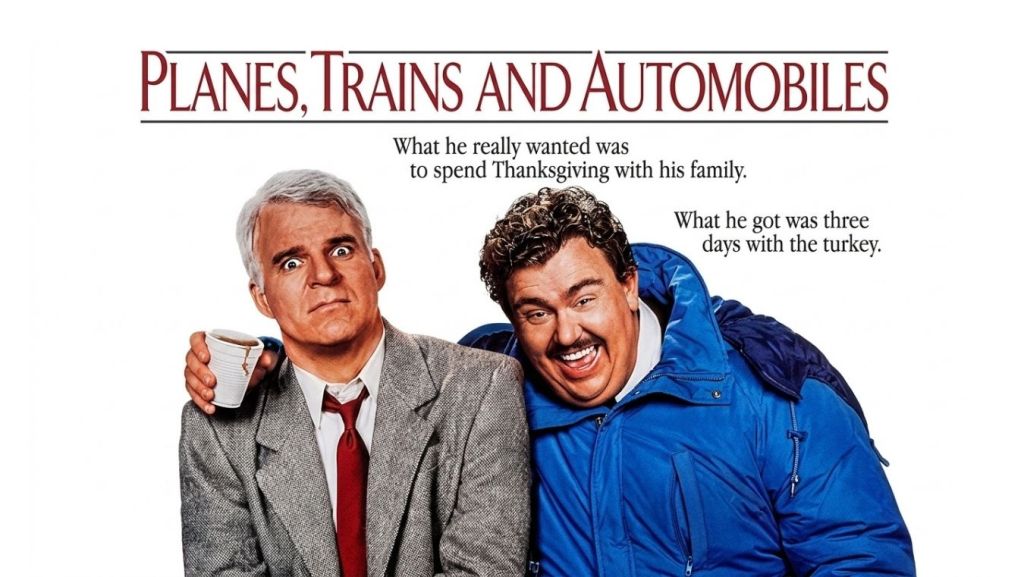
With Canadian Thanksgiving arriving on the second Monday of October (tomorrow), filmmakers and screenwriters have an ideal opportunity to study one of cinema’s most potent narrative engines: the holiday pressure cooker.
Few films master this setup quite like John Hughes’ Planes, Trains and Automobiles. By pairing an unmovable deadline with a relentless cascade of travel disasters, the screenplay turns a simple cross-country journey into a masterclass in comic escalation, character dynamics, and emotional resonance. When forced proximity meets an impossible timeline, dramatic and comedic tension accelerates naturally.
Here is how Planes, Trains and Automobiles uses the Thanksgiving setup to maximize narrative urgency, sustain second-act momentum, and earn profound character growth.
Key Takeaways
- The Unmovable Clock: A fixed holiday deadline (reaching Chicago in time for Thanksgiving dinner) creates natural, binary narrative urgency that drives every scene.
- Forced Proximity & Contrasting Foils: Trapping incompatible personalities in confined spaces—from middle-seat flights to snowbound motels—forces latent character flaws and vulnerabilities to the surface.
- Comedy as a Trojan Horse: High-concept physical comedy and escalating disasters serve as the vessel for deep, devastating third-act pathos.
- Diagnostic Scene Pacing: Balancing external travel obstacles with internal character shifts prevents mid-Act II energy plateaus and keeps the narrative dynamic.
The Ticking Clock: Planes, Trains and Automobiles and Urgency
In John Hughes’ classic Planes, Trains and Automobiles, the narrative engine is deceptively simple: Neal Page (Steve Martin) needs to get from Chicago to New York in time for Thanksgiving dinner with his family.
What makes the script a masterclass in screenwriting structural pacing is that the story is not built around the holiday itself, but rather the grueling, escalating trial of trying to get home in time for it. Hughes—who derived the story from his own real-life nightmare being diverted to Wichita, Kansas on a flight from New York to Chicago—famously drafted the initial screenplay in just three days. However, transforming that rapid burst of inspiration into a tight, 92-minute comedic masterclass required rigorous structural refinement during development and post-production.
| Narrative Beat | Story Engine & Screenwriting Technique |
|---|---|
| Core Goal | Reach home in time for Thanksgiving dinner (The External Ticking Clock) |
| Obstacle 1 | Cancelled flight due to severe weather and airport logistics (Forces Structural Pivot) |
| Obstacle 2 | Forced partnership with an incompatible foil, Del Griffith (John Candy) |
| Obstacle 3 | Cascading mechanical breakdowns, lost transportation, and stolen funds (Escalating Setbacks) |
| Climax | Arrival home accompanied by a fundamental shift in empathy and perspective |
Key Screenwriting Lessons from the Draft & Editing Process
1. The Universal Micro-Goal vs. The Internal Arc
A strong ticking clock requires an unambiguous, binary goal: Neal either makes it home for Thanksgiving or he doesn’t. Because the external goal is crystal clear, Hughes can spend maximum screen time testing Neal’s patience, snobbery, and emotional rigidity against Del Griffith’s (John Candy) boundary-pushing optimism. The external goal drives the plot, but the pressure of the clock forces Neal’s internal character arc to crack open.
2. The Danger of Over-Writing "Road Trip" Setpieces
Hughes famously shot over 600,000 feet of film* resulting in a initial rough cut that ran nearly four hours (225 minutes). The early script included expansive subplots: Neal’s wife growing suspicious that he was having an affair, extensive detours involving state troopers, and extended airline meal sequences. (*Confirmed by editor Paul Hirsch and production accounts).
The Screenwriting Takeaway: In road-trip and holiday pressure-cooker scripts, every scene that does not directly advance the core goal or escalate character tension causes narrative bloat. Trimming the film down to a lean 92 minutes proved that keeping the audience laser-focused on the central goal is critical for comedy and suspense.
3. Balancing Protagonist Sympathy in Edit & Revision Passes
In early test screenings, audiences reacted negatively to the dynamic: they viewed Del as an overbearing moocher and Neal as a helpless victim. To fix this, Hughes and editor Paul Hirsch restored subtle dialogue beats and subplots—such as a credit card mix-up establishing Del’s clear intention to reimburse Neal.
The Screenwriting Takeaway: When writing high-conflict odd-couple dynamics, make sure your “annoying” character has pure motives and your “straight-man” protagonist has clear flaws. If the audience loses sympathy for either side, the comedy turns sour.
4. The Unseen Emotional Turn
The film’s emotional climax hinges on Neal reflecting on his journey while riding the train alone near the end. Interestingly, the unguarded facial expressions Hughes captured from Steve Martin were filmed candidly between takes. Hughes recognized in post-production that Neal needed a quiet beat of realization—connecting Del’s erratic behavior to his deep loneliness and grief over his deceased wife.
The Screenwriting Takeaway: Build quiet, reflective beats before your third-act climax. A relentless ticking clock is only effective if you give your protagonist a moment to process what the journey has cost them—and what they’ve learned.
Planes, Trains and Automobiles: Script Coverage Overview
| Diagnostic Metric | Score | Key Narrative Takeaway for Screenwriters |
|---|---|---|
| Dialogue | 9.0 / 10 | Monologues act as emotional reveals rather than exposition (e.g., Del's "real article" speech). |
| Emotional Engagement | 9.0 / 10 | Uses broad physical comedy as a Trojan horse for devastating late-act pathos. |
| Character Development | 8.5 / 10 | Contradictory lead dynamics drive the narrative; Del's tragic backstory recontextualizes prior comedy. |
| Theme & Message | 8.5 / 10 | Uses holiday travel congestion as thematic architecture for gratitude and human connection. |
| Plot Construction | 7.5 / 10 | Compounding disaster structure is effective, though mid-Act II suffers from repetitive pacing cycles. |
| Originality | 7.5 / 10 | Standard odd-couple road trip elevated by highly specific character traits (e.g., shower curtain ring salesman). |
Act II Structural Pitfalls: Fixing the Mid-Point Sag and "Convenient" Plot Devices
While John Hughes’ screenplay achieves an impressive 99th percentile rating and an overall 8.3/10 Script Score, Greenlight Coverage’s breakdown highlights specific structural vulnerabilities in the second act that offer vital lessons for screenwriters tackling road-trip or holiday-confinement scripts.
1. The Mid-Act Energy Plateau (Jefferson City to St. Louis)
Between the Jefferson City bus depot and the St. Louis rental lot, the narrative rhythm experiences a subtle mid-point sag. While the physical modes of transit change rapidly (bus to foot to rental lot), the emotional dynamic between Neal and Del hits a plateau.

Compounding physical disasters maintain high stakes and prevent mid-act pacing plateaus. Source: Paramount Pictures / Getty Images
- The Problem: The characters continue bickering at the exact same emotional frequency established in the Wichita motel room. Because their interpersonal dynamic doesn’t evolve during this stretch, the travel complications begin to feel episodic rather than progressive.
- The Screenwriting Lesson: Changing the physical setting or mode of transportation is not enough to sustain Act II momentum. Every new location must force a shift in character dynamics. When Neal eventually tries to ditch Del in St. Louis, the moment would hit significantly harder if the preceding bus sequence forced Del to perform an act of genuine competence or selflessness—making Neal’s choice to leave him feel morally complex rather than just logically practical.
2. Beware of the "Convenient" Catalyst (The Motel Robbery)
To strip Neal and Del of their financial independence and force them onto the train, the script introduces a pizza delivery boy who steals their wallets overnight.
- The Problem: Greenlight Coverage notes that the robbery functions purely as a passive plot mechanism. It is set up with a single shot of the delivery boy outside the door, but it is never revisited, investigated, or given narrative consequences.
- The Screenwriting Lesson: Audiences resist plot devices that feel like a writer’s hand forcing a turn. To keep the story active:
- Option A (Organic Depletion): Rely on character-driven resource loss rather than external crimes—such as Del’s exclusive reliance on cash combined with Neal’s maxed/cancelled credit cards.
- Option B (Active Discovery): Make the discovery of a theft an active scene where the characters must cooperate to solve the immediate crisis, rather than a passive wallet-check over breakfast.
3. Plausibility Thresholds in High-Concept Setpieces
The wrong-way driving sequence on the interstate is iconic physical comedy, but on a page level, it pushes the boundaries of narrative credibility. The sequence requires Del to drive against oncoming traffic on a major highway for an extended period without noticing signs, lane markers, or headlights—while Neal sleeps soundly in the passenger seat.
- The Screenwriting Takeaway: When writing extreme slapstick or high-disaster setpieces within a grounded human story, build in environmental logic. Establishing extreme weather conditions (e.g., a total zero-visibility blizzard) or compressing the timeline gives high-stakes physical comedy the necessary plausibility to keep the audience immersed without breaking the reality of the world.
Step-by-Step Checklist for Ticking-Clock Comedy Scripts
Before diving into your script rewrite, run your draft through this step-by-step checklist to ensure your narrative engine stays tight, your stakes remain clear, and your Act II dynamic avoids predictable mid-point lulls:
| Script Checklist Item | Key Narrative Objective |
|---|---|
| Define the Ticking Clock | Set an absolute, non-negotiable deadline (e.g., Thanksgiving dinner at 5 PM) that makes the protagonist's goal binary and time-sensitive. |
| Establish the Foil Dynamic | Pair your protagonist with an opposing character whose personality, habits, and philosophy directly clash with their core flaws. |
| Escalate Travel Barriers | Ensure each attempt to solve a delay creates a compounding, worse complication rather than a simple dead end. |
| Maintain Lead Sympathy | Establish pure motives for your "annoying" character and clear vulnerabilities for your "stressed" lead so conflict stays funny rather than mean-spirited. |
| Pace the Act II Mid-Point | Drive active shifts in character dynamics during Act II rather than repeating identical bickering across changing locations. |
| Earn the Emotional Turn | Build a quiet, reflective beat before the third-act climax where the protagonist processes what the journey has cost them and what they've learned. |
Frequently Asked Questions
Why are holiday travel settings so effective for comedy and drama screenplays?
Holiday travel provides immediate, built-in dramatic context and universal stakes. Audiences automatically understand the social expectations, high emotional stakes, and strict deadlines of getting home for the holidays, allowing writers to jump straight into active character conflict without lengthy setup.
How do you keep two-hander travel comedies from feeling repetitive during Act II?
Rotate the nature of the obstacles and track clear internal shifts between the characters with every new location. Instead of repeating identical arguments, use each travel disaster to strip away another layer of defense—moving the lead dynamic from professional tolerance to open frustration, and ultimately to vulnerability and mutual respect.
What is the ideal script length for a ticking-clock road comedy?
Ticking-clock road comedies thrive on relentless momentum. Aim for a tight 90 to 105 pages to keep the comedic escalation sharp, ensure the pacing never drags in the middle act, and land the emotional resolution cleanly before the engine runs out of steam.
Get Instant Script Coverage for Your Holiday Thriller
Don’t let passive scene dynamics or pacing lulls stall your draft. Experience AI-powered script analysis with Greenlight Coverage. Upload your screenplay to get instant feedback for free, access key insights, and see where your story shines.