 Skip to content
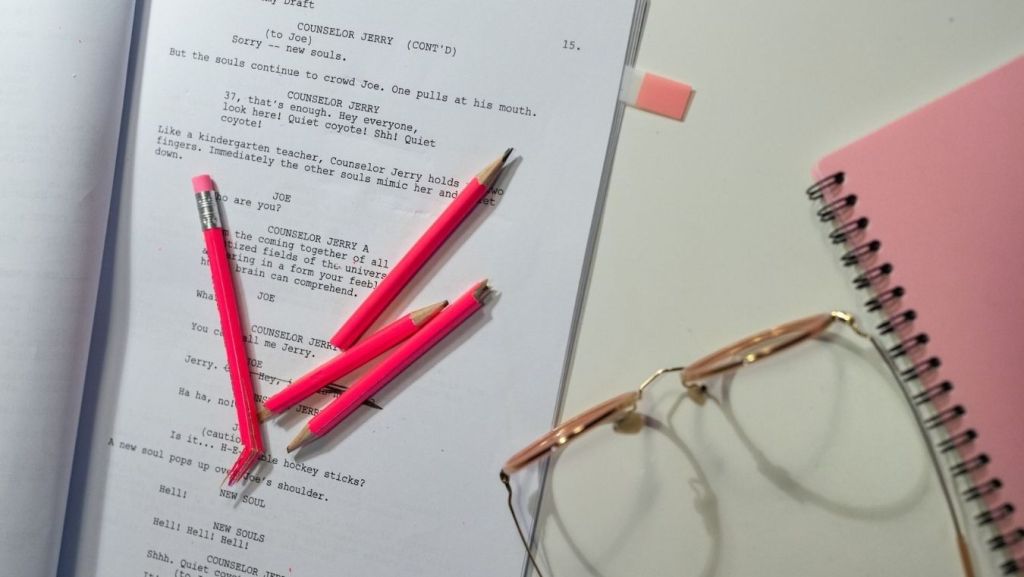
AI script notes are consistent because AI applies the same rubric every time, whether they review a first draft or a fifth rewrite. Human readers bring something different. They can pick up on tone, subtext, and market context that a model still can’t weigh correctly.
Both approaches have their strengths and limits. But when AI and human feedback don’t match, the bigger question then becomes: how much can you really rely on AI script notes?
This article looks at the data behind AI coverage accuracy and what it can (and can’t) tell you. We also put Greenlight Coverage’s scoring to the test with repeated runs of the same script. The results may tell you how much you can trust a single analysis.
The Logline
- AI matches or beats human readers on predictable formats like logline generation.
- Human readers still catch emotional nuance, market timing, and originality that no automated scoring can.
- Pairing AI coverage for structure and speed with human coverage for judgment produces the most reliable results available today.
What is Script Coverage and Why Does Accuracy Matter?
Script coverage gives a screenplay a structured review of its story, characters, and market potential. It ends in one verdict, either ‘Pass’, ‘Consider’, or ‘Recommend’, which can determine whether a script gets a second look. But how exactly is accuracy measured in a creative read?
The Anatomy of a Coverage Report
A standard report opens with a logline and synopsis, then moves into character analysis and plot assessment. Dialogue evaluation, thematic analysis, and genre classification usually follow. Every report ends with a final verdict (Pass, Consider, or Recommend). There are also some services that add budget notes or comparable titles on top of these basics.
Recommended Read: 10 Best Screenplay Coverage Services in 2026
What "Accurate" Means in a Creative Context
Accurate creative coverage depends on factual correctness, structural validity, evaluative usefulness, and consistency.
- Factual correctness: does the synopsis match what actually happens in the script?
- Structural validity: does the tool correctly spot act breaks, pacing issues, and arc completions?
- Evaluative usefulness: are the notes specific enough for a writer to act on?
- Consistency: does the same script get the same read twice?
That last one is the hardest to prove from outside. If the same script gets different results every time, how much can you trust the coverage? That’s what our test later in this article is set out to measure.
Where AI Script Notes Excel: Speed, Structure, and Consistency
AI script notes work best when analyzing the more measurable parts of a screenplay. Instead of relying on creative instinct, AI looks for patterns in the text.
Structural Analysis and Pattern Recognition
AI is consistently trained on large amounts of text, so it has no problem recognizing recurring structural issues no matter the scale, such as:
- Act breaks and story structure
- Pacing gaps
- Repeated plot devices
- Dialogue-to-description ratios
AI can review these patterns quickly and apply the same approach throughout the script. That doesn’t mean every structural note is correct. But it can help writers and readers spot issues worth reviewing more closely.
Scoring Consistency at Scale
Human readers bring personal taste, fatigue, and other factors into a read. That’s exactly why two readers may give the same script different scores or verdicts. AI doesn’t have that variability.
AI doesn’t get tired or change its approach based on how many scripts it has reviewed that day. It can apply the same rubric to each submission and still return coverage in minutes. That speed and consistency make AI the best help for screening large volumes of scripts.
Where Human Readers Still Win: Nuance, Emotion, and Taste
AI can spot patterns and structural issues, but human readers still bring something AI can’t fully match: personal judgment. Human readers are the only ones who can respond to the harder-to-measure qualities of a script that no AI model ever can
Emotional Resonance and Subjectivity
Human judgment beats automated scoring every time. AI can’t experience a scene the way a person does. “An LLM can’t care,” said Warner Bros. story analyst Holly Sklar. Only human readers can ask questions like:
- Do the characters feel real?
- Does the dialogue land emotionally?
- Does a scene feel moving?
- Does the story feel fresh or original?
That human response matters, especially for scripts that depend heavily on tone, emotion, or subtle character moments.
Marketability and Industry Context
Human readers also understand the current market. They know what buyers may see as fresh, overdone, or difficult to sell.
For example, a 2025 Variety test showed AI praising a script that a human reader flagged as derivative and overly familiar. That kind of market instinct can only come from reading hundreds of similar scripts over time.
The Hallock Study: What Happened When Hollywood Tested AI Against Humans
Earlier this year, Paramount story analyst Jason Hallock tested a question many Hollywood readers were asking: Could AI do a story analyst’s job?
Working with the Editors Guild, Hallock ran several scripts through six AI platforms. He then compared the results with coverage from human analysts. The same scripts produced very different results.
Loglines: A Near-Tie
AI performed well on loglines. AI-generated loglines were “indistinguishable” from the human versions, while a few may have been even better. That result tracks because a logline is short and follows a familiar format. That predictability gives AI a clear pattern to work with.
Synopses: Cracks Start to Show
The results changed once the scripts got more complicated. Hallock said AI-generated synopses often had an “11th-grade essay” feel and relied on repetitive phrases.
The bigger issue, though, was accuracy. AI sometimes made factual mistakes. On more complex scripts, AI mixed up character actions and, in some cases, included plot points that never happened.
Notes and Analysis: Humans Win Decisively
When it came to actual and detailed notes, human readers won by a wide margin. AI is strong at summarizing, but humans are still better and stronger at interpreting. Readers need to explain what works, what doesn’t, and why.
We Ran Our Own Test: Is Greenlight's Scoring Consistent?
To really put AI coverage accuracy to the test, we ran a single-script test on Greenlight Coverage just for this article. We submitted the same Emilia Pérez feature screenplay by Jacques Audiard 16 separate times.
The Results:
| Category | Score Range (Min–Max) | Standard Deviation | Verdict Consistency |
|---|---|---|---|
| Character Development | 7.5–7.5 | 0.0 | Never changed |
| Plot Construction | 7.0–7.0 | 0.0 | Never changed |
| Dialogue | 7.5–7.5 | 0.0 | Never changed |
| Originality | 9.0–9.0 | 0.0 | Never changed |
| Emotional Engagement | 8.0–8.0 | 0.0 | Never changed |
| Theme and Message | 8.5–8.5 | 0.0 | Never changed |
| Overall Rating | 7.9–7.9 | 0.0 | Never changed |
| Recommend Percentile | 99th–99th | 0.0 | Never changed |
Results come from a single-script test conducted on August 19, 2026. This was not a peer-reviewed study.
Greenlight Coverage returned identical scores and verdicts across all 16 runs of the same script. The script also received a ‘Recommend’ result at the 99th percentile every time.
If Greenlight’s scoring were inflating results to please writers, you’d expect scores to creep upward or bounce around between runs. That didn’t happen here, and the scoring held steady every time.
Now, that consistency sets up the next question: Is AI actually being critical, or is it simply being agreeable?
Accuracy Breakdown: AI vs. Human Readers by Coverage Dimension
AI outperforms human readers on formatting, structural, and pacing dimensions. Some parts of a coverage report still call for a human eye. Originality and marketability, for example, can depend on context and a reader’s understanding of what audiences or buyers want.
Here’s how the two compare across the ten dimensions a standard report covers:
| Coverage Dimension | AI Performance | Human Performance |
|---|---|---|
| Logline Generation | Matches or slightly beats human output | Strong, but no clear edge over AI |
| Synopsis Accuracy | Can misattribute actions or invent details on complex scripts | Consistently accurate |
| Plot Structure Analysis | Reliably flags act breaks and pacing gaps | Strong, but can vary by reader |
| Character Development Assessment | Scores consistently, but can't judge if a character feels real | Senses authenticity and emotional depth |
| Dialogue Evaluation | Tracks dialogue-to-description ratio well | Judges whether dialogue actually lands |
| Pacing and Timing | Flags pacing issues without fatigue or bias | Weighs pacing against genre expectations |
| Thematic Analysis | Identifies stated themes | Reads subtext and layered meaning |
| Genre Classification | Consistent on clear-cut genres | Better with blended or unconventional genres |
| Originality Detection | Weak, has recommended previously unsold, derivative scripts | Recognizes derivative work from experience |
| Marketability Assessment | Limited, lacks current market context | Strong, tracks what buyers want now |
The Sycophancy Problem: Can AI Be Truly Critical?
Sycophancy is when an AI tool tells you what you want to hear instead of what’s actually true. Generic chatbots like ChatGPT, Claude, and Gemini are especially prone to this, since they’re trained to be helpful and agreeable above all else.
Our repeat test gives Greenlight Coverage a useful data point. If the tool were simply flattering writers, you might expect its scores to rise or change across repeated runs. But ours didn’t move at all. In fact, Greenlight founder Jack Zhang has also said that only 5% of scripts submitted to the platform get a ‘Recommend’ rating.
Together, the results suggest that Greenlight’s scoring prioritizes selectivity over automatic praise. That doesn’t prove AI sycophancy is no longer a concern. But it does suggest the tool is calibrated to give consistent results instead of simply telling every writer what they want to hear.
The Hybrid Workflow: Using AI and Human Readers Together
AI and human readers each cover blind spots the other one has. Using both at the right stage can give writers a more complete view of their script.
AI First Pass, Human Final Review
The most common approach is simple. Use AI coverage first to catch structural issues while a script is still rough. Save the human read for bigger milestones, such as when your script is ready for agents, producers, or competitions.
Some writers also use AI between revisions to see whether their changes are moving the script in the right direction.
How Greenlight Coverage Fits into a Hybrid Workflow
Greenlight Coverage supports that hybrid workflow in a few ways. Start with your completed draft. Run it through Greenlight Coverage and use the report to guide your next round of revisions.
- If a note needs more context, use Follow-Up Questions to dig deeper.
- After revising, upload the new draft through Rewrite to see whether your changes actually improved the script.
Greenlight lets you go even further with:
- Polisher provides line-level editing suggestions for a screenplay
- Audience Insight evaluates how a script is likely to land with a target audience
- Financial Forecast estimates a script’s commercial potential
You can repeat that cycle a few times in one sitting since each report comes back in minutes. By the time you send your script to a human reader, you’ve already worked through many of the easier structural and technical issues.
Frequently Asked Questions
How accurate are AI script notes compared to human readers?
AI accurately flags structural, formatting, and pacing issues at higher consistency rates. Human readers remain more accurate on tone, subtext, and marketability judgments, areas where AI models still show measurable blind spots.
Can AI screenplay tools replace human script readers?
AI screenplay tools cannot fully replace human script readers. AI handles structure, consistency, and speed well, but it still can’t judge emotional authenticity or current market fit the way an experienced reader can. Most writers get the best results using AI for a first pass, then bringing in a human reader before a major submission.
What are the biggest limitations of AI script coverage?
The biggest limitations of AI script coverage include the inability to accurately assess subjective tone, cultural nuance, and marketability. AI tools struggle with detecting subtext, emotional authenticity, and originality. AI coverage also misattributes plot details or hallucinates events on longer, complex scripts.
Is AI script coverage safe for my intellectual property?
AI script coverage safety for intellectual property depends on the platform’s data policies and terms of service. Greenlight Coverage doesn’t train its models on any uploaded screenplay. Your script stays yours. Writers should verify confidentiality clauses, copyright registration status, and data retention practices before uploading unregistered work.
How much does AI script coverage cost compared to human coverage?
AI coverage typically runs $9 to $99 per evaluation, while human coverage runs $60 to $400 per script, according to the University of Southern California’s script coverage research guide. The turnaround time also differs, with AI delivering results within minutes and human readers requiring weeks on average.
What is the best way to use AI and human script coverage together?
The best way to use AI and human coverage together is to run scripts through AI tools first for structural, formatting, and pacing feedback, then invest in human coverage for tone, marketability, and nuanced story judgment.
Does the same script get the same AI coverage score every time?
For Greenlight Coverage, yes. A single-script test run on August 19, 2026, submitted the same screenplay 16 separate times. Every score and verdict came back identical across all 16 runs, with zero variance in any category.
Try Greenlight Coverage: Get Instant, Honest Script Feedback
Greenlight’s consistent scoring works best as a fast, honest first pass. Pair that consistency with a human read before sending your script to agents, producers, or competitions. That way, you get the speed of AI and the creative judgment of a human reader.
Try Greenlight Coverage free and see what your script’s first pass looks like today.