 Skip to content

Actionable feedback for writers is the fastest path from confusion to confident revisions, especially when tight deadlines and high expectations are on the line.
This list shares twelve practical techniques—used by working writers and producers—to sharpen story structure, deepen character arcs, and speed up collaborative rewrites.
Each step is designed to streamline your process and get your screenplay production-ready. Here’s exactly how we make script feedback efficient, specific, and genuinely transformative.
Use code 5OFFNOW to save on instant, professional script analysis with Greenlight Coverage.
1. Define the Protagonist’s Want and Wound
Every page in your script must pulse with clarity and momentum. If you want feedback that sparks progress, start by locking in your protagonist’s core want and wound. This drives their journey, motivates choices, and hooks audiences.
Checklist for Immediate Impact:
- Each protagonist needs a crystal-clear, concrete goal (want). If they hesitate, story momentum stalls.
- Their wound must inform every action—give them a reason, from page one, for what they do and why they’re broken.
- Create a one-sentence goal and wound. Use it to measure if a scene truly belongs.
By getting rigorous about this pair, you break through flat, passive writing and find emotional stakes that keep producers and readers engaged.
Strong want-wound pairs align character action with audience empathy, creating a direct line to real stakes and fast rewrites.
Real‐World Fixes for Your Script’s Core
- Audit every scene: does it push the protagonist toward their want or force them to confront the wound?
- Use antagonists or best friends to mirror, provoke, or complicate the wound.
- Track how often each scene tests the wound. More direct tests mean a stronger arc.
Writers who can explain their character’s want and wound in two sentences move faster through rewrites and get better notes. This core filter removes the guesswork.
2. Tighten the Goal-Stakes-Obstacle Loop in Every Scene
A well-paced script has one defining quality: every scene escalates the main conflict through a fast goal-stakes-obstacle loop. Producers want to know nothing is wasted.
Start each scene by clarifying the protagonist’s immediate goal. Lock in what’s at risk (stakes) and then inject a fresh obstacle—internal or external. If a scene can’t check all three, it’s a red flag.
Scene Success Formula
- Immediate scene goal: Who wants what, right now?
- Escalating stakes: What do they lose if they fail—emotionally, physically, or relationally?
- New obstacle: Does something force a turn or reversal by the end of the scene?
Quickly identify slow, sagging sections with this loop. Mark turning points, cut dead space, and compress scenes to focus on tension. Scripts built on tight loops hold a reader’s attention and always give feedback a clear next step.
3. Cut or Combine Redundant Characters
Cluttered character lists kill pacing and confuse readers. Key actionable feedback? Merge or remove any character who doesn’t drive the plot or deepen the main arcs.
Test character necessity by removing them from the story. If nothing changes, they’re not needed. If roles overlap, combine them. Strong scripts keep their cast lean and purposeful.
Rapid Character Audit Steps
- List every character’s one-line function and arc.
- Check for overlap in purpose, voice, or presence.
- Assign every supporting character a unique function, like comic relief, antagonist, or mentor.
When you focus roles, interactions become more meaningful and payoffs land harder. Coverage notes and audience reactions often cite “forgettable” characters. If they’re hard to remember, your story is working too hard.
We see higher script coverage and contest success rates when writers complete a character audit early.
4. Sharpen Dialogue to Reveal Subtext, Not Exposition

Sharp dialogue moves your story forward. When lines serve only to explain, audiences tune out. Replace flat, expositional exchanges with moments charged by what’s not said.
Start by finding lines that describe rather than imply. Rewrite so intent, conflict, or emotion simmers beneath the surface.
Dialogue Rewrite Wins
- Replace exposition with action: If a detail matters, let a character show it.
- Run the “who benefits” test: If nobody gets an edge by speaking, cut or rewrite the line.
- Table-read scenes cold to hear when words fall flat. Subtext pops when actors must work to get the point across.
When dialogue hints at secrets or reveals motives without spelling them out, every scene gains tension and entertainment value. Readers remember scripts that respect their intelligence.
5. Raise Conflict Every 10 Pages
You cannot afford slow stretches. Injecting fresh, escalating conflict every 10 pages is one of the simplest, most effective forms of actionable feedback you can use.
Conflict drives forward motion, keeps stakes alive, and gives every section a reason to exist.
- Use a 10-page window audit. If conflict drops, that section needs revision.
- Track conflict types. Mix relational, internal, external, and environmental for constant tension.
Scripts that escalate reliably win table reads and stick with professional readers. Each spike in conflict increases engagement and greenlights more critical feedback.
Every 10 pages, a new challenge or twist should force your characters to act or adapt.
6. Track Emotional Turns at Each Scene Break
Flat scripts lack growth. You must show emotional movement in every scene, not just plot. Actionable feedback here targets one question: How did the lead’s emotional state or a core relationship change?
At each scene break, mark the before and after. If the answer is “not at all,” you know that scene needs a rework.
Simple Tracking Tools
- Use color-coded notes or a margin system to show shifts.
- Alternate between action-driven and reaction-driven scenes.
- List emotional states (negative, positive, complicated) to spot tonal jumps or dull sections.
Scripts built on moving emotional arcs make growth visible. Writers who chart these shifts revise with intent, and producers love scripts that make emotional beats land on cue.
7. Convert Theme into Visible Choices Under Pressure

Themes are only compelling when lived out under pressure. Vague statements never land. Instead, demand that your characters prove what your story stands for with difficult choices.
Write down your central theme and map it directly to three moments: early, midpoint, and climax. Each must demand choices that cost.
Build a Theme Map
- Identify your theme in one line.
- Locate three escalating choices that force your hero to test and prove this theme.
- Make each choice cost them something real.
Here, theme stops being abstract. Readers and viewers see it front and center. When scripts tie theme to action and consequence, your message resonates and your structure tightens. This targeted feedback results in scripts that feel essential—and are easier for teams to greenlight.
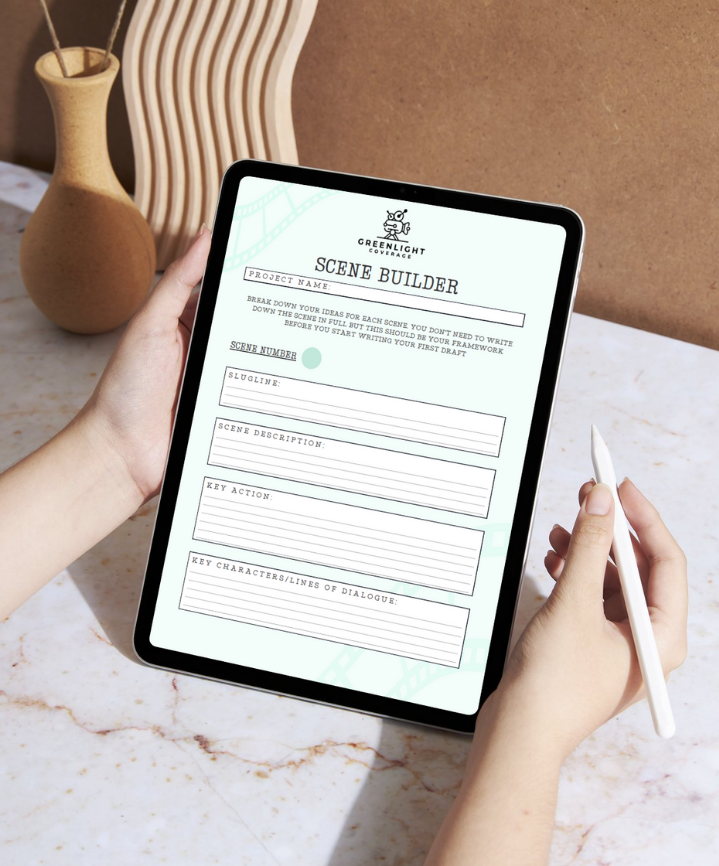
Scenes can drift without direction.
This worksheet keeps every beat focused and intentional.
8. Replace Adverbs with Vivid Actions
If you want your rewrite to pop off the page, hunt down adverbs and trade them for specific, visual actions. Producers and readers skim over generic direction, but sharp verbs get noticed. This shift makes every moment feel immediate and camera-ready.
Start with a single pass—search for adverbs in scene descriptions and dialogue. Change “walks quickly” to “rushes, nearly tripping on the curb.” Details that play on screen make your work stand out.
Results When You Swap Adverbs for Action
- Scenes feel fast, focused, and image-driven—directors know instantly how to block action.
- Dialogue tags become unnecessary clutter when the action shows intent.
- Scripts with strong verbs grab attention during coverage and spark visual imagination.
Writers see improved pace and clarity instantly. This small change creates energy across the script.
Action, not description, holds attention and speeds up coverage review.
9. Swap Passive Beats for Decisions That Cost
Passive characters drive away producers. Each major beat should be a risky choice—not a reaction. As you review your script, highlight when a character just watches or waits. Then rewrite and make them decide, with something on the line.
A decision that comes at a cost makes story and theme tangible. If you can delete a character’s action without consequences, the moment needs work.
How to Identify and Replace Passive Moments
- Seek out beats where a character is stuck or waiting.
- Flip these moments into choices that force their hand.
- Track the immediacy and long-term cost of every decision.
Use a “cost ledger” for each section: What does this decision risk—reputation, love, safety? Scripts structured this way build momentum with each page, making feedback cycles leaner and more actionable.
10. Ensure Setups Pay Off with Surprising Inevitability

Coverage professionals call out “dangling setups” as a major flaw. If you introduce a detail, it must pay off. But payoffs should surprise even as they make perfect sense.
Map your setups and their echoes. Trace each one to the scene where you deliver on its promise. If you find unpaired moments, you have clear feedback: build or cut.
Setup/Payoff Tracking Yields Results
- Use a table to match every setup with its resolution.
- Make sure payoffs feel earned through reversals and escalating consequences.
- When a payoff lands, double-check it aligns with character arcs and the logic of your world.
Scripts with airtight payoff structures get better feedback and faster greenlights. Make every detail count.
11. Compress Description to Camera-Ready Images
Every extra line of story description can slow your read or bore your audience. Trim long paragraphs into tight visual cues. If you can’t see it on screen, cut it or change it.
Start scenes late and end them early. Readers want momentum, not filler.
Best Practices to Tighten Your Page
- Limit descriptions to one punchy line per setting or action beat.
- Break action into shots directors can use immediately.
- Prioritize cues that actors can play, not thoughts they can’t show.
Use stopwatches or read-alouds to catch slow intros. The payoff: your script moves at the pace of a finished film.
Short, visual description keeps your momentum high and your script competitive.
12. Validate Changes with Table Reads and Pacing Checks
Don’t assume changes work. Read them aloud—cold, without actor bravado—to surface slow spots and rough dialogue. Invite trusted colleagues, time the scenes, and ask where attention dips or confusion rises.
Capture actionable feedback with follow-up questions: Where did you lose the story? What felt unclear or dull?
Action Plan for Live Feedback
- Use table reads after every major draft change.
- Record the session, flag drop-offs, and focus new drafts on these moments.
- Encourage plain, honest notes that highlight confusion or pacing issues.
At Greenlight Coverage, we turn table-read findings into targeted revision plans. Scripts sharpen with every cycle. Real-time feedback gets your story into production shape with fewer backslides.
The Science and Psychology of Actionable Feedback for Writers
Every step we outlined leverages behavioral science. Checklists, sprint-style tasks, and visual progress trackers cut anxiety and boost your output. When you make feedback measurable and focused, you get scripts that earn higher coverage scores, win more contests, and grab reader attention instantly.
Writers using our approach report:
- More coverage requests
- Faster turnarounds on rewrites
- Increased professional reads
Tools like our Full Context Reviewer and instant feedback reporting let you build a fix list, prioritize changes, and finish drafts faster.
Actionable feedback isn’t just advice. It’s the #1 predictor of draft success and the path to a greenlit script.
Conclusion
Direct, practical feedback transforms weak drafts into bold, shootable screenplays. Build your process around specific, measurable actions—not generic advice. Apply these techniques, use industry-trained review tools, and you’ll convert every note into visible progress. This is the fastest path to making your script stand out, sell, and get produced. Take action. Your rewrite starts now.
