 Skip to content

Every script faces a gatekeeper before it moves forward: the script reader.
In this article, we break down 11 secrets from professional script readers that can transform your screenplay feedback process.
Get practical, insider perspectives on what experienced readers look for—from clarity and marketability to emotional impact—so you can efficiently elevate your script and make every draft count.
Use code 5OFFNOW to save on instant, professional script analysis with Greenlight Coverage.
1. Clarity of Intent on Page One
Writers and producers, you have just seconds to grab a professional script reader. Those first few lines and images on page one set the tone for the entire script. Are you signaling a clear, high-concept hook or blending into the slush pile? We’ve seen scripts drop from “consider” to “pass” in just those critical opening moments.
What Drives First-Page Decisions
Readers recognize seasoned writers by crisp intent right from the first page. If your premise, protagonist, and tone are vague, you lose goodwill fast. In the industry, a “first-page test” is real—if we can’t tell the genre, main character, or stakes, the odds are you will not advance.
What signals clarity:
- Immediate genre cues (mood, location, and urgency).
- Protagonist introduced through concrete action.
- A problem or provocative question anchoring interest.
- No info dumps—character and world unfold with economy.
Scripts that “read like a novel” or open with tired tropes (alarm clocks, writers at their desk, or floating backstory) often don’t survive the first read.
First-Page Audit Checklist
- Does your first page make the reader care within the first 3 lines?
- By page three, can a script reader summarize your inciting tension in one sentence?
- Is there a single, vivid image or action that defines the script’s mood?
Open with motion, intention, and a clear promise—your opening page is your handshake.
2. Premise Viability and Market Awareness
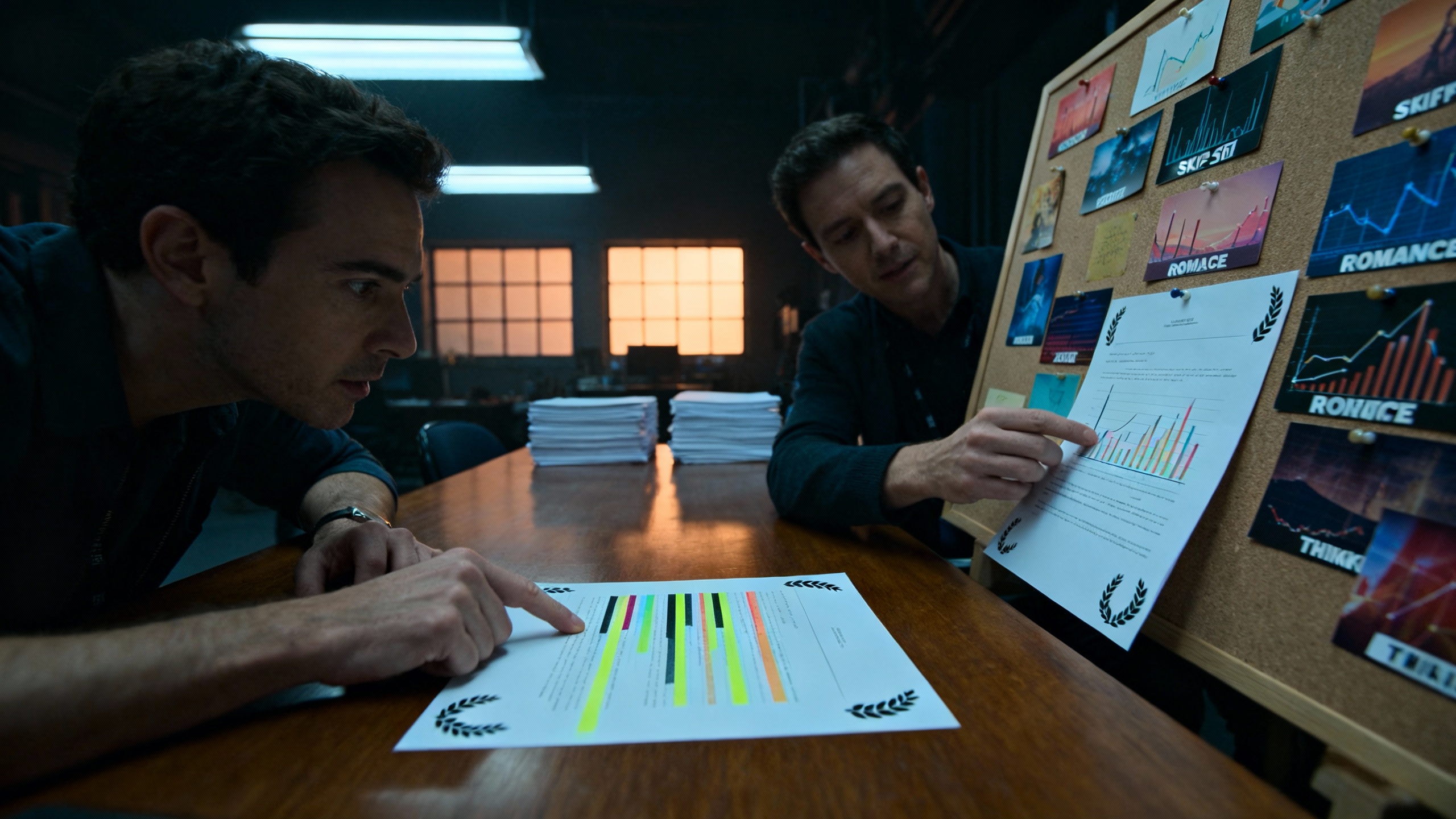
Before a script gets a full read, we check if the concept is actually in demand. Producers and buyers want specificity, market fit, and something fresh. If your premise isn’t distinct, your script can be flawless and still get a “pass.”
How Readers Vet a Premise
We rapidly scan for high-concept hooks that fit clear genres or market trends. Right now, romance, high-concept sci-fi, and contained low-budget thrillers get extra attention. Scripts overloaded with VFX or lacking a distinct identity read as risky bets.
Questions we ask right away:
- Can the premise be pitched in one compelling, market-aware sentence?
- Does it belong to a popular or growing genre?
- Is this different from what’s crowding streamers and theaters?
Many ideas die here. We map your one-sentence concept against recent spec sales, festival winners, and what’s moving at agencies.
Testing Your Hook Against the Market
- Write a 15-word logline. Is it clear who the hero is and why their journey matters?
- Compare your pitch with three recent, similar market examples.
- Can you justify your story’s budget level with its hook and audience?
Scripts with only a quirky gimmick fall flat. Readers also ask, can this story anchor a series or a franchise? If not, clarify your concept or rework your angle for longevity.
Premise viability means knowing what sells and where you belong.
3. Emotional Stakes That Resonate
A pro script reader looks for more than plot events—they dig for the real emotional stakes. If your characters risk nothing meaningful, there’s no reason to care about the outcome.
What We Look for in Stakes
Scripts stand out when every main character wants something deeply and stands to lose something tangible and moving. Personal stakes need specificity. “Saving the world” doesn’t connect unless you tie it to something intimate—a job, a loved one, personal identity.
Checklist for Emotional Resonance:
- Can you sum up your lead’s stakes in one sentence?
- Are escalating risks built into each act’s turning points?
- Do emotional stakes link to both universal (relatable) and personal (unique) conflicts?
Every beat should raise the cost. Readers crave a “midpoint escalation” and an “all-is-lost” moment. Weak or generic stakes often come from a lack of cost—if your protagonist could succeed without loss, something is missing.
Creating Real Stakes that Matter
- Give your characters a defining cost (a relationship, self-worth, career).
- Connect universal risks (identity, legacy, reputation) to each act.
- Test scenes with outside readers. Does the outcome matter to them by page 10?
If readers don’t feel what’s at stake, the rest of your craft is invisible.
4. Scene Economy and Lean Storytelling
Industry readers spot overwritten scripts in seconds. Lean prose keeps us engaged. Readers have hundreds of scripts to cover, so we demand pace, not padding.
Fast Pacing, Zero Bloat
We flag scripts that “read like a novel”—too much description, internal thought, or repetitive scenes. Every scene should move character or story. If a scene can be summed up in a single line, you might not need the whole scene.
Best Practices for Lean Storytelling
- Do three editing passes: structure, scene, then line-by-line.
- Use active verbs and sensory details instead of monologues or exposition.
- Trim 10% from each page—remove any line, action, or description that doesn’t escalate plot or illuminate character.
Results of Scene Economy
- Faster reads, higher coverage scores.
- Producers see the potential runtime clearly.
- The hook and stakes don’t get buried under filler.
Economical scripts signal you respect a reader’s (and a producer’s) time.
5. Character Want/Need Alignment
Every decision your protagonist makes has to track with what they want and what they truly need. If this arc isn’t obvious to the reader, your script can feel flat, even in an exciting genre.
How Script Readers Track Character Arcs
We pay close attention to each act pivot. The drive is never just about external goals. The best scripts reveal a gap between want (external) and need (internal). That gap creates dramatic irony and emotional investment.
Steps to Check Alignment
- Write down your protagonist’s want and need, side by side.
- Mark each turning point with what decision the character faces.
- Are there clear obstacles—internal and external—that test growth?
- Identify three concrete choices that show growth, and three that reveal resistance.
Scripts that lack this visible transformation rarely get a “recommend.”
Why Want/Need Gaps Matter
- Readers spot forced or unearned transformations.
- The most compelling arcs let the audience see the need before the protagonist does, building anticipation.
- If your protagonist avoids personal consequence, the story loses urgency.
Growth comes from hard choices that force your hero beyond comfort—and readers are watching for it.
6. Subtext in Dialogue

Dialogue flies or flops based on subtext. If every line is “on the nose,” your characters sound fake and your scenes drag. Pro readers are ruthless about lazy dialogue.
How Pros Spot Depth in Dialogue
We look for implied meaning. The best scenes reveal what’s left unsaid, whether through unique phrasing, tension, or hidden motivation.
Key Signs of Great Dialogue:
- Meaning sits below the surface—characters talk around their wants.
- Emotions show in actions or visuals, not just words.
- Repeated phrases, evasions, and loaded pauses enhance authenticity.
Readers notice when characters drop exposition or explain stakes directly. Instead, the real art is embedding struggle, desire, or conflict in every exchange.
Rapid Drill: Sharpening Your Dialogue
- Rewrite key lines three ways: explicit, neutral, hidden intent.
- Challenge yourself to show the subtext through behavior or silence.
- Remove parentheticals—let word choice and situation do the heavy lifting.
The “subtext test”: if the scene’s purpose survives without direct mention, the dialogue is working.
Readers recommend scripts where every line hints at something deeper. Make dialogue your secret weapon for stakes and character.
7. Visual Storytelling Mastery
Readers crave scripts built for the screen. Cinema is a visual language. When we open a script, we hunt for action lines that show, not tell. It’s a fast way to spot who really understands how stories play out on film.
How Readers Assess Visual Clarity
Strong scripts use present-tense, punchy lines that can be filmed immediately. Worldbuilding details come through setting, props, or quick behavior—not static description. We know within a page who gets it.
- Action lines make us “see” the story, not just read exposition.
- Characters show emotion through clear, physical choices.
- Each object, location, or gesture reveals something new.
If you rely on long backstory dumps, it’s time to pivot. Turn exposition into three tight visuals or moments. Show us the burnt letter instead of explaining regret.
The best scripts are storyboards on the page.
8. Pacing Rhythms That Compel
Script readers scan for momentum. They want scripts that move. Lag or mid-act slumps drag down coverage scores. The right pacing propels every reader to “just one more page.”
Getting Momentum Right
Check if action and dialogue scenes alternate to keep attention high. Pacing issues usually surface around act two. Pros pinpoint the midpoint and make sure tension spikes. Use short scenes for urgency, longer ones for big reveals.
- Scenes shift tempo often—no two act beats feel the same.
- Midpoint “recalibration” injects new stakes.
- Dialogue, action, and transitions feel natural, not forced.
Pacing maps help. Mark your eight plot points. Is each moment a step up? If you hit a slow stretch, add a new obstacle or reveal.
Solve drag with variety, structure, and surprise.
9. Theme Integration and Cohesion
A theme should echo through plot, character, and image—not announce itself. Script readers want to sense what your story means on every page, not hear it explained.
Building Subtle, Powerful Themes
We love scripts that use visual motif, character contradiction, and scene choices to reinforce theme. Don’t hammer a single “moral” into dialogue. Instead:
- Let objects, images, or repeated lines grow richer through the story.
- Make supporting characters offer alternative answers to your thematic “question.”
- Let the climax “answer” the theme by action, not speech.
If you can point to three scenes where theme is clear without being named, you’re set. Overwriting theme reads as preachy and instantly lowers reader engagement.
Let your theme stand out by the choices your characters make.
10. Structural Confidence and Formatting Fidelity
Industry readers notice professionalism in every detail. A script built with clean formatting and clear structure reads better and builds trust. Poorly formatted scripts get skipped.
What Readers Expect
We require industry-standard formatting: Courier 12, proper margins, precise scene headings, and consistent page layout. One page equals one minute. Crucial plot points must land where expected.
- Use checklists and tools to mark major beats—inciting incident, midpoint, climax.
- Check every scene heading for clarity and time.
- Proof your dialogue and action blocks for easy reading.
Here at Greenlight Coverage, our Proofreading Tool checks for common issues in minutes. Fix typos, formatting slips, and slugline inconsistencies fast. A clean, professional script makes you look ready to work at the highest level.
Formatting is the first test of your script’s readiness.
11. Professional Polish and Script Presentation
The gatekeepers expect excellence. Typos, bad layouts, and messy title pages shout “amateur.” You need flawless presentation to rise above the competition.
Delivering a Film-Ready Script
We look for correct title page format, page count, clean slugs, and consistent naming. Fix every typo. Package your script in a polished PDF. Triple-check with tools—and do a read-aloud to catch awkward structure or rhythm.
- Use proofreading utilities for grammar, pacing, and technical glitches.
- Add a concise, pro-level logline and one-page synopsis.
- Present a clean, consistent voice and clear scene objectives.
Here at Greenlight Coverage, we help writers catch overlooked errors so that scripts pass every hurdle. Presentation matters. Producers and execs want to see you can deliver under pressure.
Flawless presentation shows you respect the process and are ready for industry attention.
How to Audit Your Script Like a Professional Reader
Writers and producers, don’t guess. Start each review with a killer logline. Walk through all 11 secrets, one by one. Rate your script. Take notes where your feedback falls short.
- Use structure worksheets and our coverage tools to map your plot points.
- Set up a revision plan. Tackle clarity, structure, and stakes first.
- Finish with a polish pass—then check everything through our Full Context Reviewer for actionable notes.
Keep tracking your progress with a simple scorecard. Measure improvement every draft. Let coverage tools provide that second set of eyes your project deserves.
Move with purpose. Every script should read one step closer to greenlight material.
Conclusion
Take these secrets, use them as your personal development plan, and raise your script to industry level. Put in the work. Test, revise, and trust that every obstacle brings you closer to a script that gets read, gets noticed, and gets results. Want to see your script clear the first hurdle every time? Start with these steps now.

